Why Roof Ventilation Matters for Florida Homes. Most homeowners think about shingles, tiles, metal panels, or leaks when they think about their roof. But one of the most important parts of a healthy roofing system is something you may not notice from the ground: ventilation.
Roof ventilation helps hot, moist air escape from the attic while allowing fresh air to move through the roof system. In Florida, that matters year-round. Heat, humidity, heavy rain, and long cooling seasons put extra stress on roofs. When attic ventilation is poor, the roof may age faster, indoor comfort may suffer, and moisture problems can build quietly over time.
For homeowners in Winter Haven, Lakeland, Haines City, Davenport, Poinciana, and surrounding Polk County communities, understanding ventilation can help protect both the roof and the home underneath it.
Florida Attics Get Extremely Hot
Florida homes absorb a lot of heat. During long sunny days, roofing materials heat up quickly. That heat transfers into the attic, especially when ventilation is limited. If hot air gets trapped, attic temperatures can climb and stay elevated for hours.
That trapped heat can affect the roof from below. Asphalt shingles may age faster when they are exposed to heat from the sun above and hot attic air below. Over time, this may contribute to curling, cracking, granule loss, and shortened roof life.
Good ventilation helps reduce heat buildup by allowing air to move through the attic. It does not turn an attic into an air-conditioned space, but it helps the roofing system breathe the way it was designed to.
Moisture Is Just as Important as Heat
Heat is only half of the problem. Florida humidity can also create moisture concerns inside an attic.
Moisture can enter through everyday living, bathroom fans that are not vented correctly, kitchen exhaust, roof leaks, or air leaks from the living space. If that moisture has nowhere to go, it may collect on wood framing, insulation, roof decking, or fasteners.
Over time, excess moisture can contribute to wood deterioration, musty smells, insulation problems, and mold concerns. A roof that looks fine from the street may still have attic conditions that need attention.
This is why a proper roof inspection should not only look at the outside surface. The attic can tell an important part of the story.
Signs Your Roof May Have Ventilation Problems
Ventilation issues are not always obvious, but there are warning signs homeowners can watch for. These may include unusually high indoor cooling costs, rooms that stay hot, a musty attic smell, visible moisture on attic materials, rusted roofing nails, stained roof decking, curling shingles, repeated roof repairs, or a roof that seems to be aging faster than expected.
Another common sign is inconsistent roof wear. If one area of the roof looks much older than the rest, heat buildup, sun exposure, drainage, or ventilation may be part of the problem.
If you notice these issues, do not assume the shingles are the only concern. The attic should be evaluated too.
Intake and Exhaust Need to Work Together
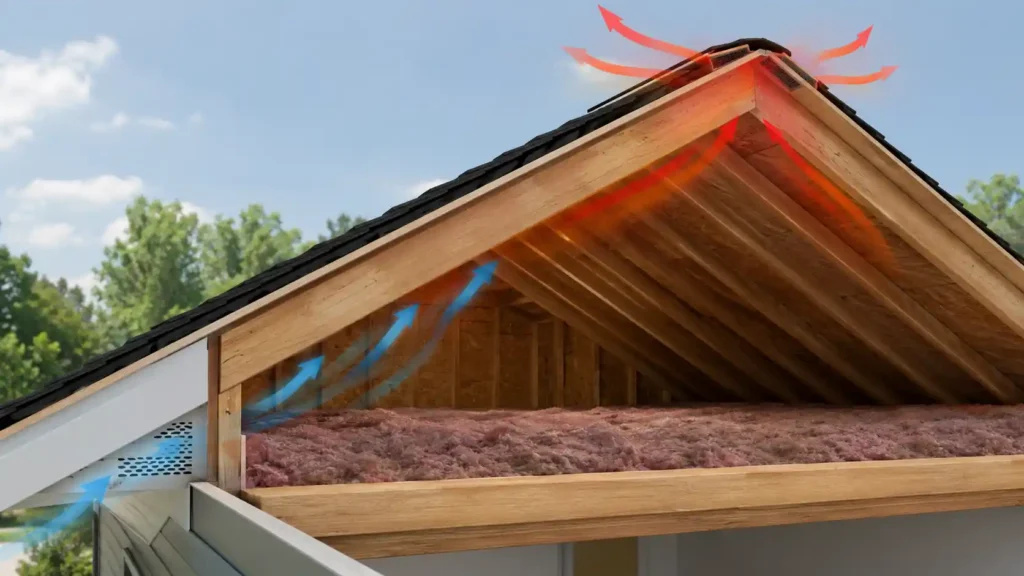
A balanced ventilation system usually includes both intake and exhaust. Intake vents allow cooler outside air to enter, often through soffit areas. Exhaust vents allow hot air to escape near the upper part of the roof.
If intake is blocked, exhaust vents cannot work properly. If exhaust is missing or poorly placed, hot air may remain trapped. If insulation covers soffit vents, airflow may be restricted even if the home technically has vents installed.
This is one reason soffit condition matters. Damaged, clogged, painted-over, or improperly installed soffit can affect attic airflow. A roofing contractor should evaluate how the whole system works together instead of only counting vents.
Ventilation Affects Roof Replacement Planning
If you are replacing your roof, ventilation should be part of the conversation before installation begins. A new roof installed over poor attic ventilation may still face the same heat and moisture problems that affected the old roof.
Florida roof replacement also involves code-aware installation practices, including underlayment and water protection requirements. The 2023 Florida Residential Code states that when a roof covering is removed and replaced, a secondary water barrier must be installed according to the applicable code sections. Ventilation, underlayment, decking condition, flashing, and roof covering all work together as one system.
A good roofing contractor will look beyond the visible shingles and explain whether the attic, soffit, vents, and decking need attention during the project.
Do Not Add Vents Without a Plan
Some homeowners think the answer is simply adding more vents. More is not always better. Too much exhaust without proper intake can create pressure issues. Mixing different exhaust vent types incorrectly can also reduce performance.
The best approach is to have a professional evaluate the roof design, attic layout, existing venting, soffits, insulation, and roof covering. Then the ventilation plan can be matched to the home.
Protect Your Roof From the Inside Out
Your roof does more than keep rain out. It has to manage heat, humidity, airflow, drainage, and daily Florida weather. Proper ventilation helps the system last longer and perform better.
Budget Roofing Service has served Winter Haven and Polk County homeowners since 1952 with honest roof inspections, repairs, replacements, and exterior roofing services. If your roof is aging unevenly, your attic feels excessively hot, or you are planning a roof replacement, schedule a free inspection and ask about ventilation.
A healthier roof starts with more than what you see from the curb. It starts with the entire system working together.