
Cool roof concept
Reflective surfaces can reduce heat gain, but results depend on attic conditions and ventilation—not just shingle color.
If you’re trying to replace or repair a roof in Florida, the hard part usually isn’t picking shingles. It’s understanding permits, inspections, required documents, insurance steps, and what roof system choices actually make sense for heat and storms. This guide gives you calm, clear checkpoints so you can move forward confidently.
Quick reality check: Most “roofing surprises” come from unclear scope, missing product documents, or permit steps nobody explained. Use this page as your homeowner checklist before you sign anything.
Tip: Ask for your “closeout packet” up front. Homeowners who do this usually avoid the most common post-job confusion.
Florida has statewide code, but permit steps vary by jurisdiction. The goal is simple: the scope and documents must match what’s being installed. That’s how you avoid delays, failed inspections, and “stop work” surprises.
Florida Product Approval is documentation used to confirm certain building products meet code requirements for use in Florida. In roofing, it can apply to major components like roof coverings, underlayment types, and system details depending on the job.
Plain English: If the paperwork doesn’t match the roof system, you may lose time, fail inspections, or get forced changes mid-job.
Homeowners hear “the 25% rule” when repairs start adding up. It’s a compliance concept tied to how much of the roof is repaired or replaced within a time window, and it can affect whether a job is treated like a larger scope project. The right move is to verify how your local jurisdiction is applying it before you sign.
Good contractors don’t dodge this conversation. They explain it, document it, and help you avoid mid-job surprises.
In Florida, heat management is part of roof performance. “Cool roof” concepts can help, but the real win comes from the roof working as a system: proper ventilation, underlayment choices, and details that hold up to wind-driven rain.
Reflective surfaces can reduce heat gain, but results depend on attic conditions and ventilation—not just shingle color.
Ventilation helps manage heat and moisture. Underlayment is your secondary protection layer when storms hit hard.
Be skeptical of “miracle” promises. Ask: what’s the tested standard, what are limitations, and what details must be installed correctly?
Flashing, edges, penetrations, and transitions cause most real leaks. The best roof systems treat those details like first-class priorities.
If your roof has storm or wind damage, your first job is to get organized. Good documentation and a clear scope can make the process smoother. We help homeowners document the condition of the roof and communicate clearly with the adjuster during the claim process.
Important: Under the right circumstances, homeowners can qualify for a roof replacement at little to no out-of-pocket cost. That can happen through an insurance claim, and in some cases through manufacturer-related warranty circumstances when documentation and conditions line up. The only way to know is to inspect and document it properly. Get ahold of us today for a roof inspection.
Financing can be a helpful option, but the order matters: inspection first, scope next, financing after. That prevents mismatched applications and scope changes that create stress later.
Most reroofs require a permit and inspections. Your contractor should confirm requirements for your address and scope.
Typically the licensed roofing contractor pulls the permit and coordinates inspections so the scope and documents stay consistent.
It’s documentation that helps confirm certain materials are approved for use under Florida code. Mismatched documents can slow plan review or inspections.
Dry-in is the checkpoint during the job when the roof has underlayment and key waterproofing details installed to protect the home while work continues.
If leaks recur, repairs stack up, or the roof system is near end-of-life, replacement may be more predictable. An inspection clarifies the smart move.
Under the right circumstances, yes. Documentation, scope, and qualifying damage are key. Start with an inspection so you know where you stand.
After the inspection and scope are confirmed. Financing works best when the project is clearly defined.
Author: Budget Roofing Service, Inc. Roofing Team
Reviewed by: State-certified contractor (CGC1530780 | CCC1328257 | CCC1330277)
Service area: Winter Haven and Polk County, plus surrounding Central Florida communities.
Disclaimer: This guide is for homeowner education. Permit requirements and inspection steps vary by jurisdiction and property conditions.
Always verify requirements with your local building department before signing contracts or starting work.
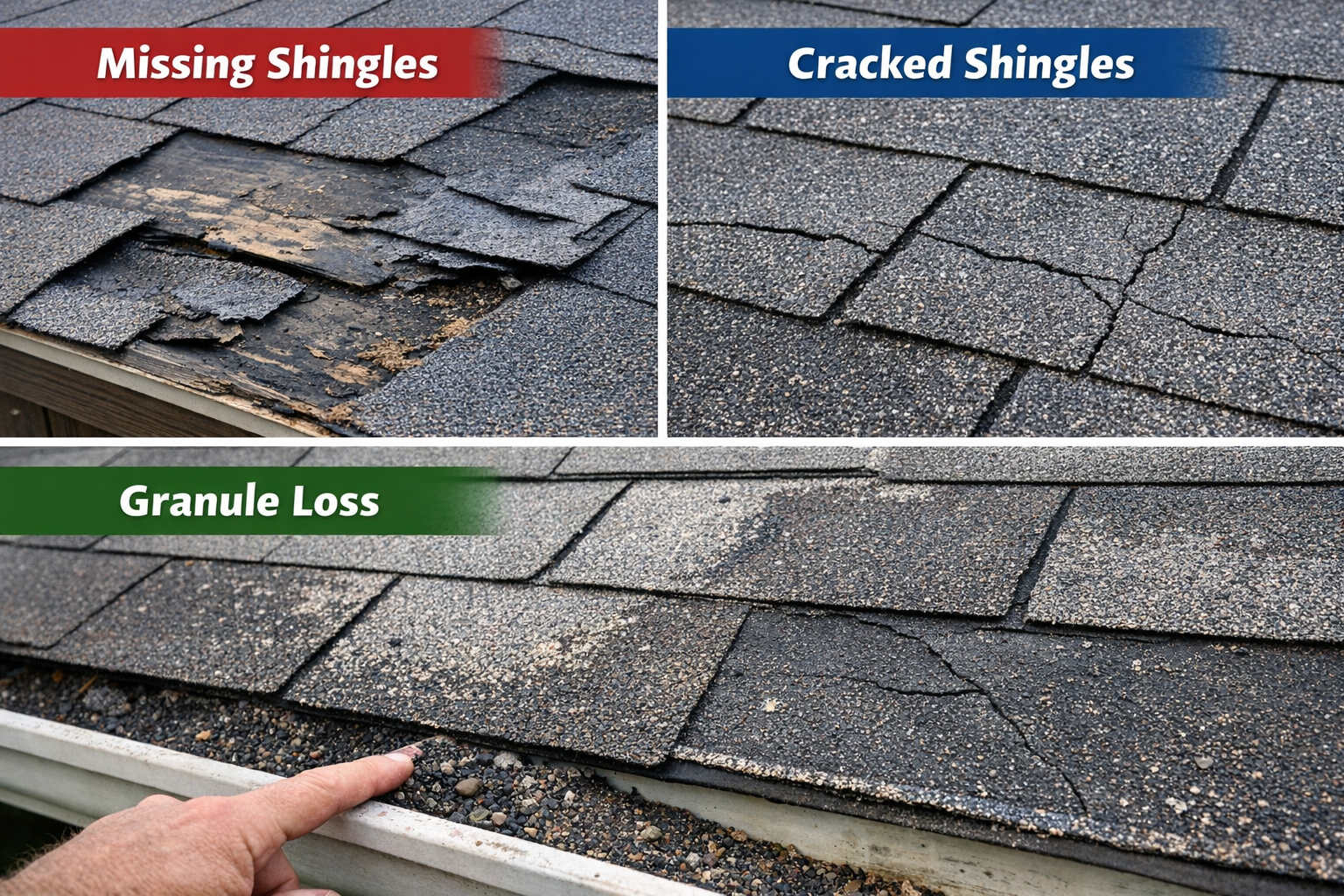
Missing shingles, cracked shingles, and granule loss are not just cosmetic issues. These are some of the most common signs we see on roofs that later qualify for insurance-covered replacements.
Inspections are free. We document damage, explain your options clearly, and help determine if your roof may qualify for insurance or warranty coverage.
Loading Google reviews...
★★★★★ 4.9 rating from 50+ local reviews
Protect your home or business with help from an experienced Roofing Company in Haines City, FL. Schedule your roof inspection today and get straightforward recommendations for repairs, replacement options, and long term roof care from the team at Budget Roofing Service, Inc.